
By Ituze Ntwali Ynis Macrine, Mukunzi Kirezi Olga, Divene Nyiramasabato, Byiringiro Elie Prince
The morning rush in Nyarugenge District, Kigali, is a vibrant tapestry of commerce and ambition, amidst the sounds of moto-taxis and street vendors, a quieter rhythm pulses from a modest, brightly painted compound: Amizero Primary School. Amizero, meaning “hope” in Kinyarwanda, is more than just a cluster of classrooms; it embodies Rwanda’s unwavering commitment to education, serving the bustling, complex heart of the nation’s capital.
At precisely 7:30 AM, the schoolyard, swept clean and bathed in the morning sun, fills with the joyful chatter of children. This structured environment stands in contrast to the unpredictable livelihoods of many families nearby. Inside the classrooms, where the government’s push for a competency-based curriculum (CBC) is being implemented, the transformation is most evident.
Third-grade teacher Mr Claude stands before her class. Gone are the days of rote memorization. Today, his lesson focuses on practical problem-solving using local market scenarios. “If Mama Umuhoza bought 12 mangoes for 1,500 RWF and sold 8 of them for 1,200 RWF, how much profit did she make on the sold mangoes?” he asks, his voice encouraging. The children don’t just solve the equation; they discuss the economics of the transaction. This is a direct outcome of the national shift in pedagogy, moving from “knowing” to “doing.”
Rwanda’s educational sector has seen remarkable structural investment, a crucial context for Amizero’s success. (Official Source) According to a recent report from the Ministry of Education (MINEDUC), the country has achieved near-universal primary school enrollment, with the next challenge being the sustained improvement of learning outcomes. Furthermore, the 2024/2025 budget allocated a significant share to education, specifically earmarking funds for teacher training and technology integration across districts like Nyarugenge.
“The foundational challenge is no longer access, but quality,” states Dr. Christine Mutoni, an Education Policy Analyst based in Kigali. “We see schools like Amizero, which benefit from targeted infrastructure projects and teacher professional development, becoming models. The data shows that where teachers are trained in the CBC and are supported with adequate materials—and where the student-teacher ratio is manageable—literacy and numeracy rates climb faster. This sustained investment is crucial to achieving Vision 2050’s goal of a knowledge-based economy.”
This analysis validates the ongoing changes at Amizero, where a focused effort to integrate digital learning tools has been instrumental in boosting engagement.
The success stories, however, are best told through the eyes of the community. Jean-Claude, a parent who runs a small tailor shop near the school, speaks with conviction about the change he sees in his daughter, 10-year-old Neema.
“Before, Neema would come home and repeat facts. Now, she comes home and asks ‘why?’ and ‘how?'” Jean-Claude smiles, adjusting a bolt of fabric. “She used to see school as a duty; now she sees it as a place where she learns to think, to solve problems that help her life, even my business. When she helped me calculate the cost of a new machine, I knew the school was teaching her something real. Amizero truly is ‘hope’ for our children’s future.”
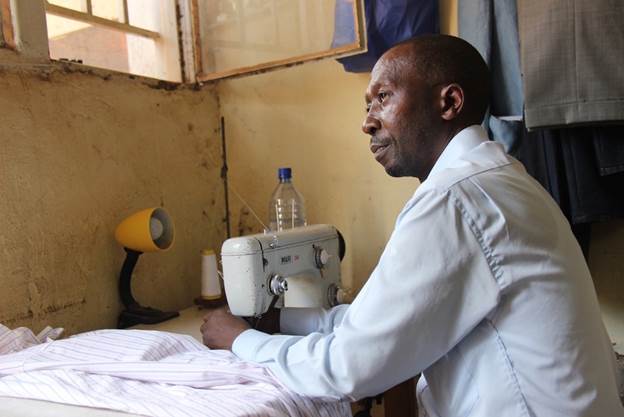
This parental feedback highlights the core objective of the competency-based approach: making education directly relevant and applicable to the challenges of modern life and the local economy.
While Amizero shines, its location in Nyarugenge also underscores the persistent challenge of educational equity. Urban centers can mask deep disparities. The presence of well-resourced, government-aided schools like Amizero is vital for ensuring that children from all socio-economic backgrounds have a fair shot. The government’s consistent support for school feeding programs at Amizero is a non-academic intervention that is just as critical, addressing the nutritional needs that directly impact a child’s ability to focus and learn.
As the final bell rings and the students pour out, their laughter echoing off the school walls, the atmosphere at Amizero Primary School is one of satisfied effort and bright potential. The story of Amizero is the story of modern Rwanda: a nation systematically rebuilding its foundations, brick by educational brick. It proves that with targeted investment, expert guidance, and genuine community buy-in, hope is not just a name above a school gate, but a daily lesson taught and learned in the heart of the capital.