
RJEN Empowers Educators with AI for Smarter Teaching and Research
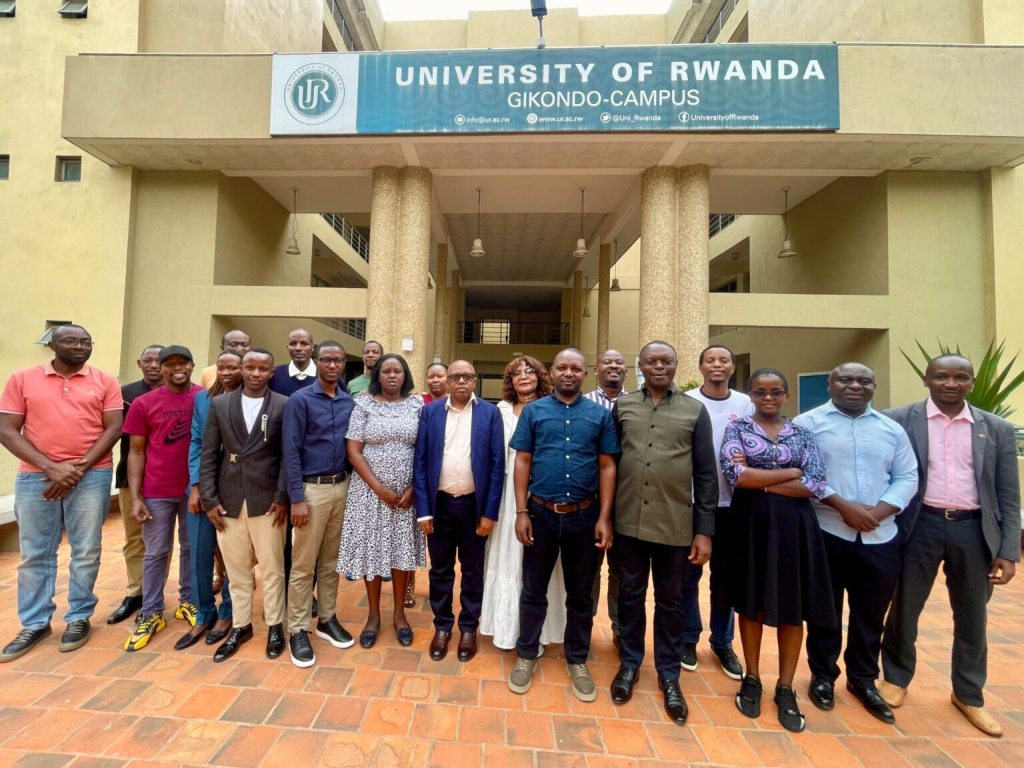
On a cool Saturday morning at the University of Rwanda’s Gikondo Campus, journalism lecturer Rev. Jean-Pierre Uwimana paused before addressing a room full of educators. The room buzzed with curiosity and a hint of anxiety. For many of the 21 lecturers gathered, artificial intelligence (AI) had always seemed like a tool their students mastered far faster than they did. But over the next two days, that perception would be decisively turned on its head.
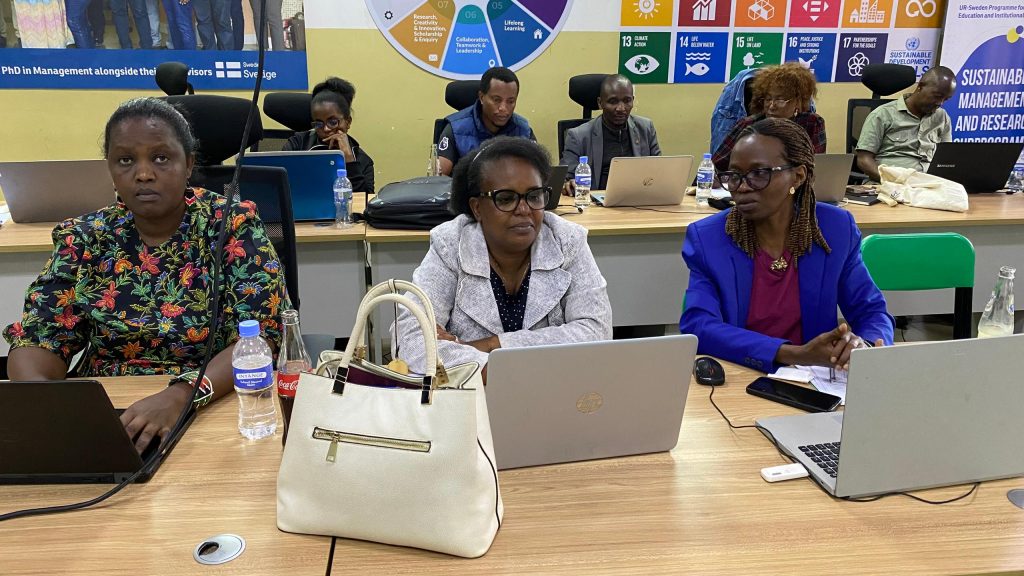
Head of Department of Journalism, Mount Kigali University, Festus Irungu, at the centre, with Prof. Margaret Jjuko, Left, and Madam Justin Kathambi, right, following the AI training.
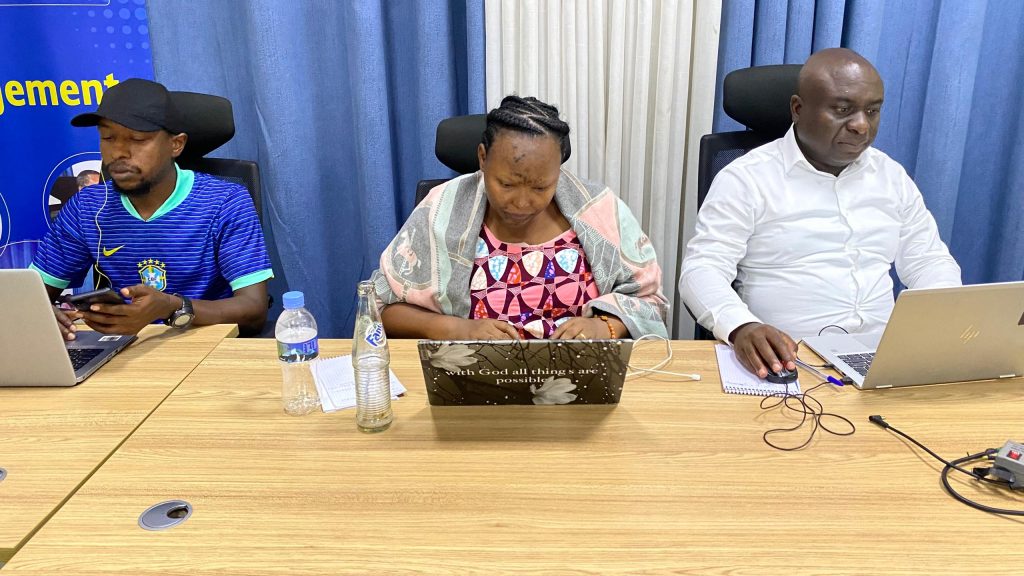
The Rwanda Journalism Educators Network (RJEN), in collaboration with the Fojo – Rwanda Media Programme (RMP), had convened journalism and communication lecturers from across the country for a hands-on training aimed at demystifying AI and visual design in the classroom. The workshop sought to strengthen educators’ capacity to integrate modern digital tools into teaching and research, ensuring students remain competitive in a rapidly evolving media landscape.
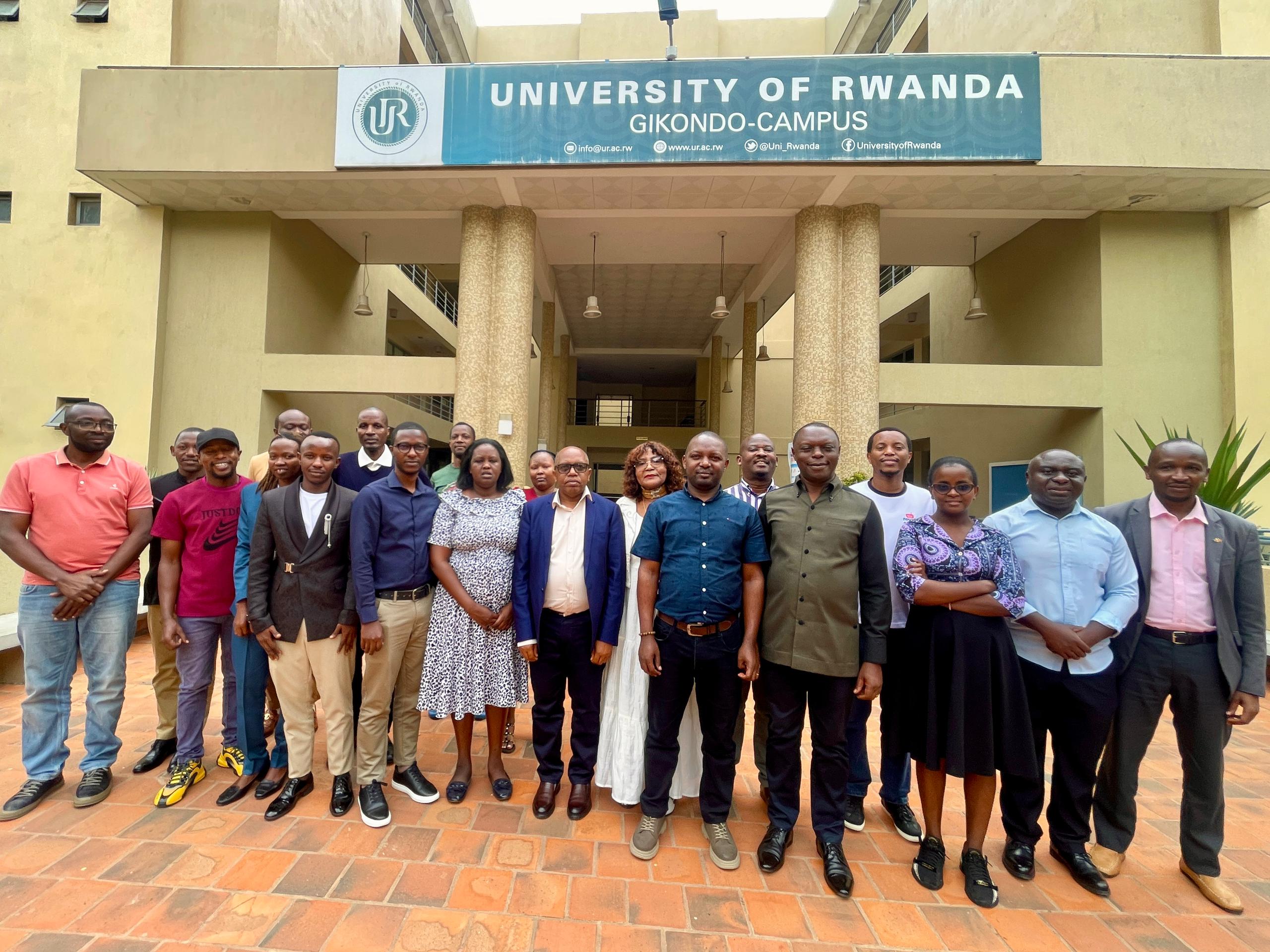
Participants represented four key institutions and RJEN members: the University of Rwanda (UR), Mount Kigali University (MKU), East African University Rwanda (EAUR), and Institut Catholique de Kabgayi (ICK).
AI: Assistant, Not Replacement
Rev. Uwimana, who serves as the RJEN President, said the goal was straightforward: to empower lecturers to use AI meaningfully without feeling threatened by it.
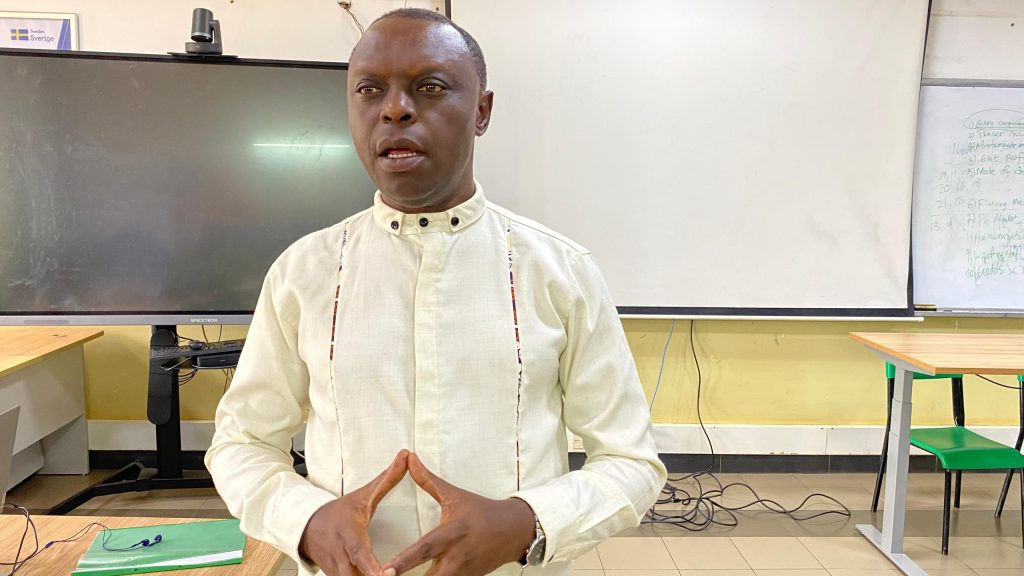
Rev. Jean Pierre Uwimana, a journalism lecturer at UR and President of the RJEN addressing the participants.
“We want educators to enhance their ability to use artificial intelligence and visual design in teaching effectively,” he said. “AI should assist teachers and researchers, not replace them.”
Throughout the sessions, lecturers explored how AI can support lesson planning, academic research, fact-checking, grading, and multimedia content creation. Many admitted that the training successfully challenged long-held assumptions about their students’ technological advantage.
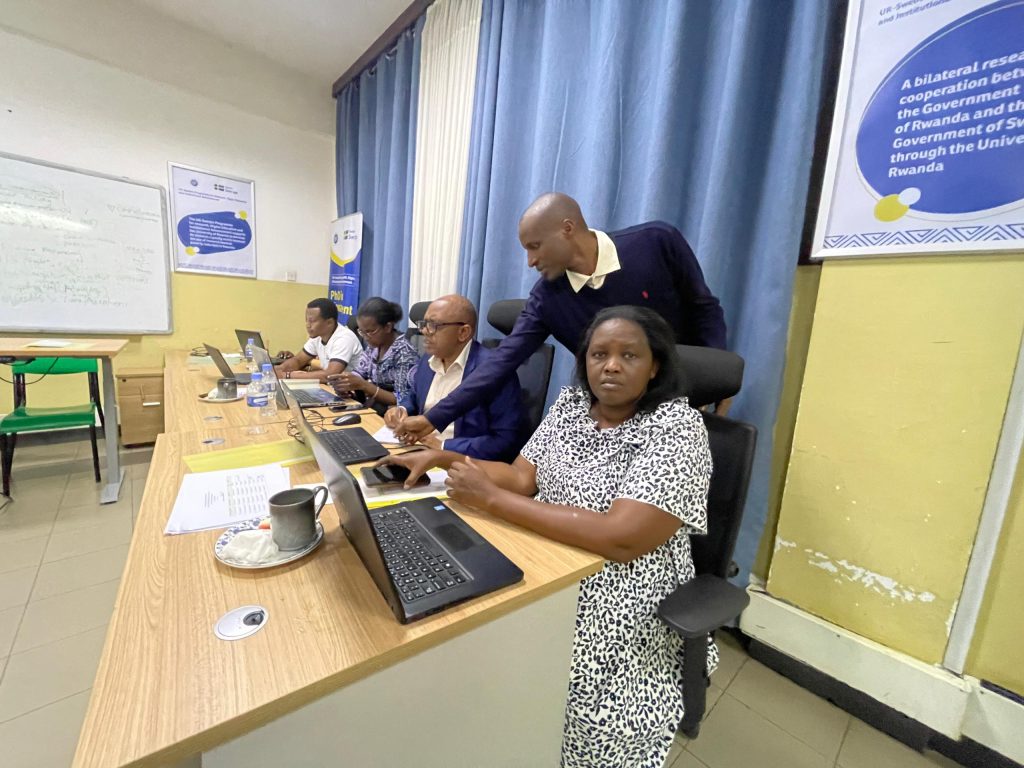
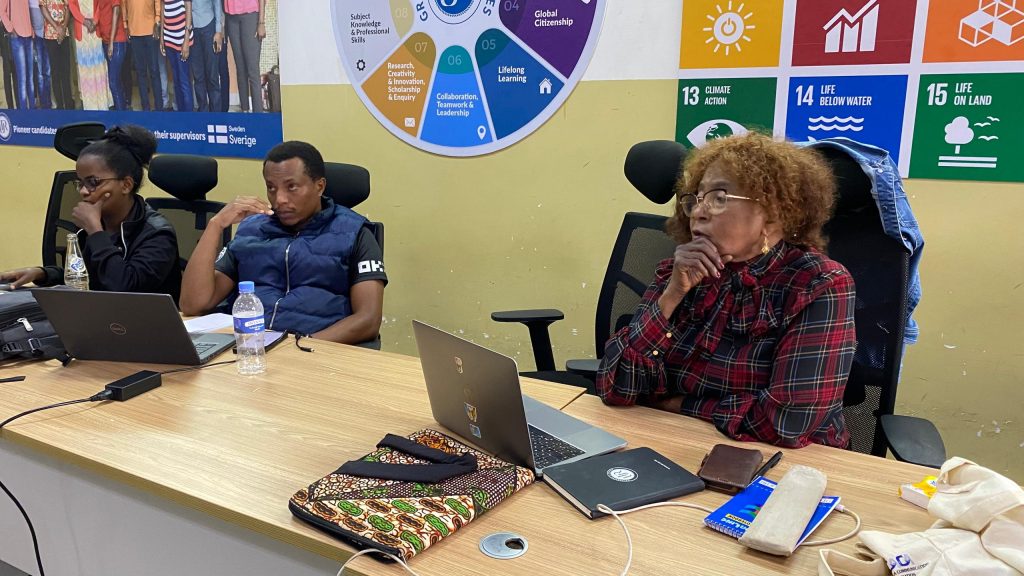
Madam Lucy Jelagat from Mount Kigali University follows the training.
Dr. Jeanne d’Arc Mukamana, a lecturer at the University of Rwanda, said the experience was transformative. “We used to think students were far ahead of us in AI and digital tools, and sometimes that discouraged us,” she said. “But we learned that we too can embrace these technologies. They help us work faster and produce better results.”
MKU to Integrate AI Ethics into Core Modules
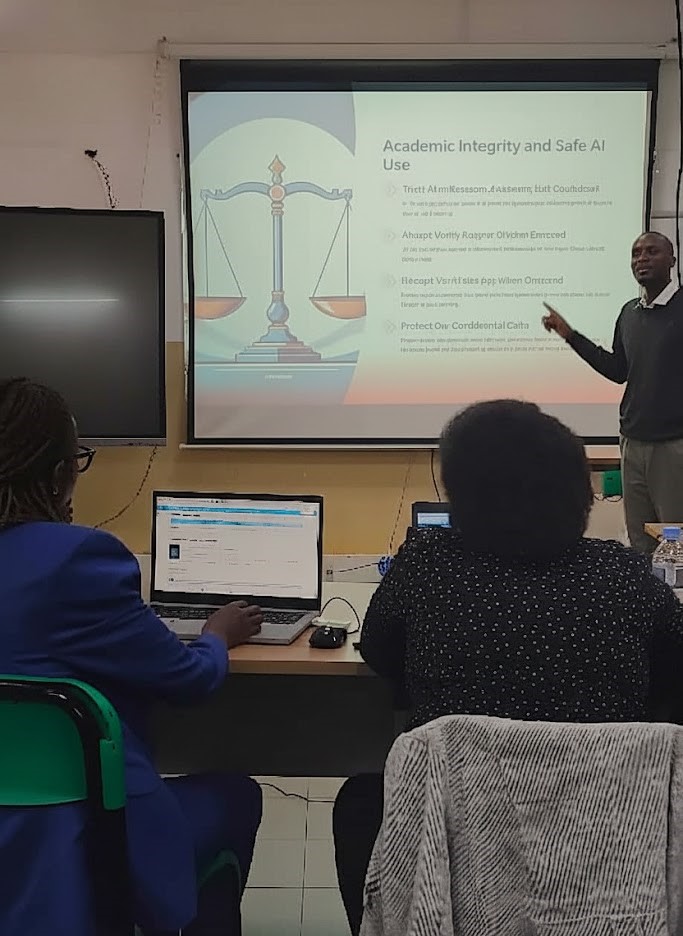
Emmanuel Habumuremyi, Executive Secretary of the Rwanda Journalists Association (ARJ), guides participants on ethical usage of AI.
The training’s impact is already translating into curriculum action, particularly at Mount Kigali University.
Festus Irungu, the Head of the Department of Journalism, Film, and Communication at MKU, emphasized the critical need for immediate implementation. He called upon the participating scholars to diligently cascade the lessons learned to students, integrating AI ethics and practical use into core modules such as Digital and Online Journalism.
“The responsible use of AI is no longer optional; it is a foundational skill,” Irungu stated. “Our lecturers must ensure students are not just using AI tools, but using them ethically and critically in their coursework to uphold professional standards.”
Dr. Mukamana further added that she intends to emphasize responsible use of AI in her classes, particularly in research, where students must learn critical skills: verification, fact-checking, and ethical content sourcing to uphold academic integrity.
Upholding Human Judgment
Beyond classroom use, the workshop also delved into how AI can support multimedia production, including visuals, audio, and social media content. Facilitators emphasized crucial guidelines: copyright awareness, upholding ethical standards, and the explicit importance of disclosing AI-generated work.
The training was led by two seasoned industry experts: Emmanuel Habumuremyi, Executive Secretary of the Rwanda Journalists Association (ARJ), and Charles Twagiramungu, Director of Isano Radio and Urban Radio.
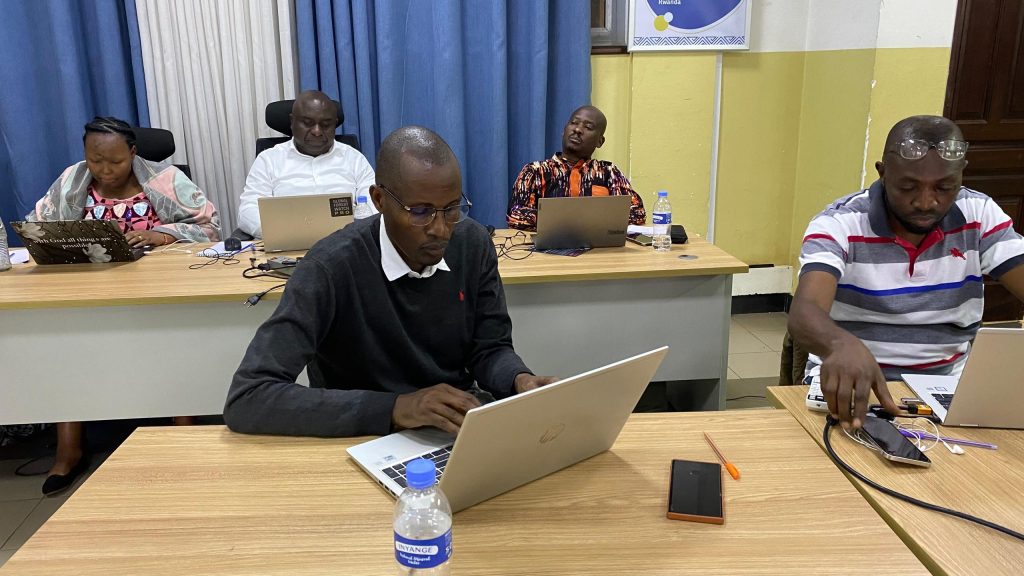
Habumuremyi urged educators to adopt a balanced approach. “AI is powerful, but it does not replace human judgment,” he cautioned. “Educators must teach students how to use it critically, not blindly.”
By the end of the two-day workshop, the once-uncertain room had transformed into a space of confidence and renewed enthusiasm. Lecturers agreed that AI is not a threat, but a crucial tool that can transform journalism education when guided by ethical and responsible standards. As the world accelerates toward digital innovation, the group concluded that both educators and students must adapt, stay informed, and use AI meaningfully to enhance learning and uphold ethical journalism.